

Caleb, now 8, at the kitchen table where his family takes his food allergy drops every morning.
The invitation had been on the fridge for two weeks, and Dana Whitfield still hadn't answered it. A classmate's birthday party. A trampoline park, a sheet cake from a grocery store bakery, thirty kids, and one of them, her son Caleb, severely allergic to peanuts. Most parents see an invitation. Allergy parents see a risk assessment.
Caleb was diagnosed at three, the way many kids are: a bite of a cookie at a family gathering, hives spreading up her arms, a terrifying drive that ended in an emergency room. After that day, the Whitfields did what every allergist tells every family to do. They read every label. They carried epinephrine everywhere. They briefed teachers, grandparents, and other parents like a security team.
And it worked, in the narrow sense that Caleb stayed safe. But Dana describes what it cost in a way most allergy parents will recognize instantly.
Here's how she puts it:
“We weren't living with a peanut allergy. We were organizing our entire life around one. Every party, every restaurant, every playdate started with the same question: what could go wrong?”
Dana W., Caleb's mom
The Fork in the Road: When the Allergist Offered OIT The Fork in the Road
When Caleb turned six, his allergist raised something new: immunotherapy. Instead of only avoiding peanuts and hoping, Caleb's immune system could be gradually trained with tiny, controlled amounts of the very protein he reacted to, raising the threshold it takes to trigger a reaction.
The version offered was oral immunotherapy, or OIT: measured doses of peanut protein, swallowed daily, with dose increases done in the clinic every couple of weeks. OIT is real medicine with real results, and for some families it is absolutely the right call. But as the Whitfields dug in, the shape of it started to worry them.
Up-dosing appointments meant hours in the clinic, again and again, with a first grader. Reactions during OIT treatment are common enough that families are coached extensively on managing them. Dana read forums where parents described the daily dose as a source of dread. Some families thrive on OIT. Many quit partway.

Then a parent in a food allergy group mentioned something Dana had never heard from her clinic: the same immune training, delivered as drops under the tongue, at home.
The Discovery: Food Allergy Drops, at the Kitchen Table Drops, at the Kitchen Table
Sublingual immunotherapy, or SLIT, has been used for environmental allergies for decades, and physicians increasingly apply the same principle to foods: micro-doses of the allergen, absorbed under the tongue where tolerance-promoting immune cells are concentrated. The doses are a fraction of the size used in OIT, which is exactly why the side-effect profile is so much gentler.
For the Whitfields, the practical difference was the whole difference. Through Curex, Caleb was screened by a licensed physician, tested from home, and prescribed custom-compounded drops matched to his profile. No clinic waiting rooms. No up-dosing appointments on a school day. Thirty seconds at the kitchen table every morning, supervised by a physician the family messages directly.

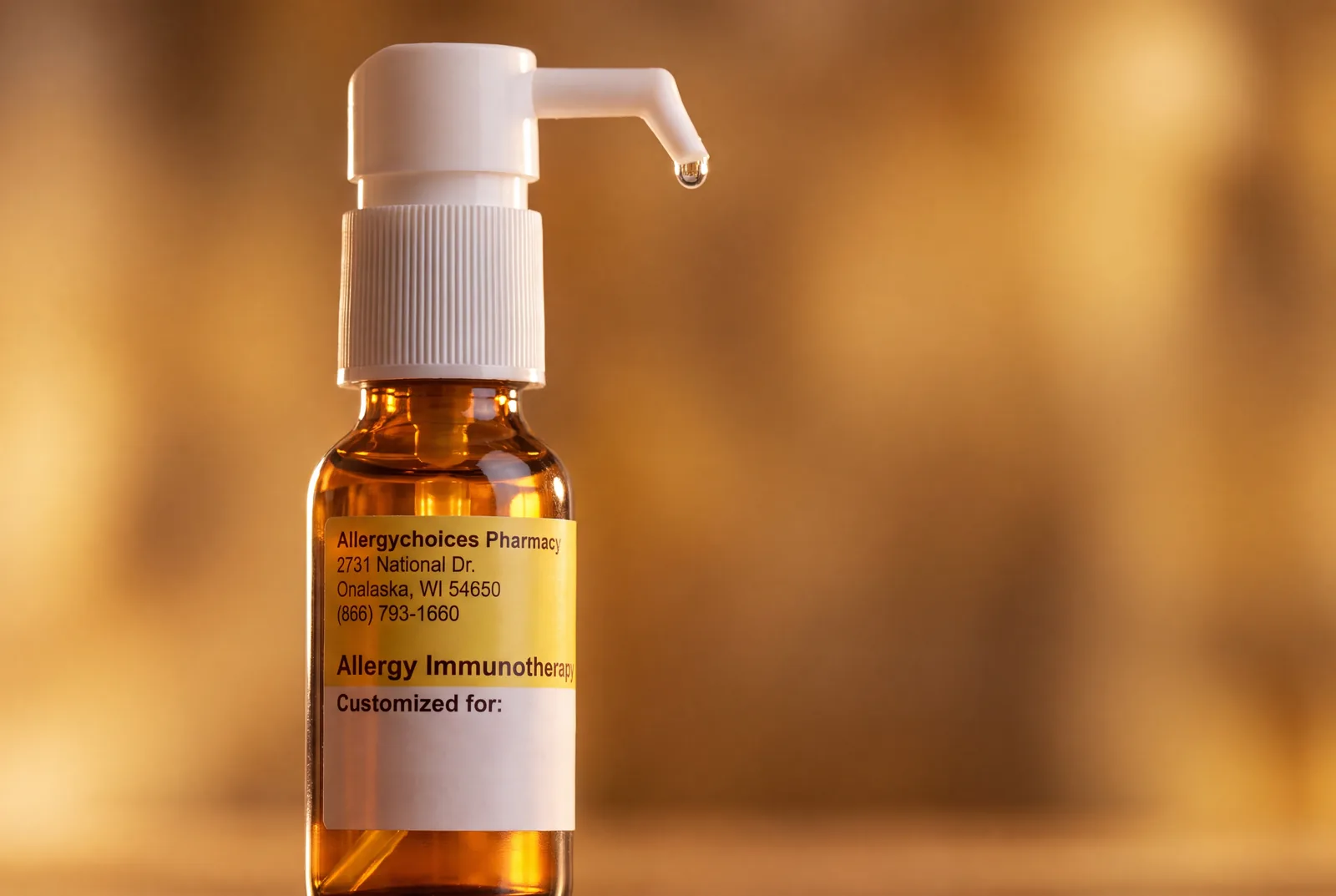
SLIT delivers micro-doses of the allergen under the tongue, where tolerance-building immune cells are concentrated.
The first months, Dana says, were almost anticlimactic. A brief tingle under the tongue the first week, then nothing. Which, for a family used to treating peanut protein like live ammunition, was its own kind of shock.
Six months in, something shifted:
“The drops changed Caleb's immune system slowly. But they changed our anxiety almost immediately. For the first time since she was three, we weren't defenseless. We were doing something about it.”
Dana W., Caleb's mom
The Birthday Party The Birthday Party
Allergy families have their own private benchmarks. Not lab values: real ones. Can he go to the party without me shadowing the snack table? Can we say yes to the sleepover? Can a grandparent take him for a weekend without a laminated instruction sheet?
A year into treatment, with his physician tracking his progress, the Whitfields got their answer. There was a party. There was a cake nobody could fully vouch for, so Caleb skipped it, like he always has. But there was also a moment Dana didn't expect: she looked at her phone an hour in and realized she hadn't thought about the allergy once.

Weeks later came the scare that would have defined an entire season of their lives two years earlier: a cross-contact slip at a restaurant. The kind of accidental trace exposure that once sent them to the ER. This time, under a raised threshold built over months of treatment: nothing. A non-event. Caleb still carries epinephrine. The family still reads labels. But the cliff edge they lived on has a guardrail now.
Curex has confirmed increased demand for pediatric food allergy consultations ahead of the school year. Check availability →
The Science: How Food Allergy Drops Retrain a Reaction How the Drops Work
A food allergy is a case of mistaken identity. The immune system flags a harmless food protein as a threat, builds antibodies against it, and mounts a full emergency response on every exposure. Avoidance manages the risk. It does nothing to correct the mistake.
Immunotherapy corrects the mistake directly. Tiny, physician-controlled doses of the allergen, kept deliberately below the reaction threshold, teach the immune system to log the protein as background instead of threat. Over months, the threshold rises. Clinicians call it desensitization: the difference between reacting to a trace and tolerating one.
Desensitization raises the amount of allergen it takes to trigger a reaction, turning trace exposures from emergencies into non-events.
Both OIT and SLIT use this principle. The difference is dose, delivery, and burden:
READER OFFER
Start Curex, your first 2 months are free
Physician-supervised sublingual immunotherapy, custom-compounded and shipped to your door. Start an annual plan and get your first 2 months free.
Get 2 Months Free2 months free applies to new annual immunotherapy plans partnered with Curex. Free U.S. shipping · Cancel any time
What the First Year Looks Like
Days 1–30
Screening & gentle build-up
A licensed physician reviews your child's history and test results before anything ships. Drops start at very low concentrations. Most kids notice nothing beyond an occasional brief tingle under the tongue. Consistency, not intensity, is what matters here.
Months 2–6
The threshold starts moving
The daily dose does quiet, cumulative work. Your physician monitors progress and adjusts the protocol. Families consistently describe this stretch as the anxiety-relief phase: the allergy is finally being treated, not just dodged.
Year 1 and beyond
Durable tolerance builds
Longer treatment builds deeper tolerance, and protection against accidental exposure grows with it. Epinephrine stays in the backpack and labels still get read. The difference is what a trace exposure means: a note in an app instead of a night in the ER.
THE EARLY WINDOW
Younger immune systems are more adaptable, which is why pediatric allergists talk about immunotherapy in terms of windows, not deadlines. Every year of waiting is a year of avoidance-only. The screening is free, and a licensed physician decides whether your child is a candidate before anything is prescribed.
Why Families Choose Drops Through Curex Why Families Choose Curex
Food allergy immunotherapy is real medicine, and it should feel like it. Every Curex family gets an at-home test kit, a licensed physician who reviews the results and the child's full history, custom-compounded drops matched to their profile, and ongoing supervision with direct messaging. It is the only telehealth path CAAEE has identified that combines a real prescription workflow with a genuinely at-home format.
No clinic queue. No up-dosing calendar taped to the fridge. No choosing between treating the allergy and living a normal school year.
YOU HAVE TWO CHOICES:
Keep the vigilance system running forever: the labels, the calls ahead, the shadowing at parties, and hope the next accidental exposure stays small.
Or, take the free assessment, talk to a physician, and start raising the threshold that decides what an accident means.

2 Months of Immunotherapy Free
New patients get 2 months of Curex sublingual immunotherapy free, applied automatically when you complete the free 60-second assessment.
Get 2 Months Free- Prescription, custom-compounded to your child's profile
- Screened and supervised by a U.S. licensed physician
- Cancel any time, no long-term commitment
2 months free applies to new annual immunotherapy plans partnered with Curex. Standard plan pricing applies after the free period; cancel anytime.
What Other Parents Say
“We drove 90 minutes each way for our son's environmental shots for two years. When his allergist okayed drops at home, it gave us our Saturdays back. The physician check-ins are more thorough than I expected.”
Melissa G. · Verified parent
Columbus, OH
“The screening was real. They turned down our first request until our daughter's asthma plan was updated, which honestly made me trust them more. Six months in and the morning drop is just part of breakfast.”
Andre P. · Verified parent
Tampa, FL
“What changed first was me. I stopped lying awake before every field trip. We still carry the epi-pen everywhere, but we are finally doing something about the allergy instead of just avoiding it.”
Priya N. · Verified parent
Sacramento, CA
“It is not instant, and nobody should expect it to be. But the process is organized, the doctor answers our messages, and our son's last follow-up showed real progress. Wish we had started a year earlier.”
Tom R. · Verified parent
Denver, CO
Frequently asked questions
Are food allergy drops the same as oral immunotherapy (OIT)?
Both are immunotherapy: they train the immune system with small, controlled doses of the allergen. The difference is delivery and burden. OIT uses swallowed doses that are increased during regular in-office visits, and it carries a higher rate of reactions during treatment. Sublingual immunotherapy (SLIT) uses much smaller doses absorbed under the tongue, taken at home under physician supervision, with a gentler side-effect profile.
Is sublingual immunotherapy safe for kids?
SLIT has one of the mildest side-effect profiles in allergy medicine, with the most common effect being brief itching or tingling under the tongue. Every child is screened by a licensed physician before treatment, and food allergy protocols are monitored throughout. It is not appropriate for every child, which is exactly why the physician review comes first.
Will my child still need to carry epinephrine?
Yes. Always. Desensitization raises the threshold your child can tolerate before reacting, which is powerful protection against accidental exposure. It is not a cure, and no responsible clinician will tell you to stop carrying epinephrine or to stop reading labels.
How long does it take to see a change?
The first months are a gradual build-up phase. Measurable threshold changes are typically evaluated by your physician over months, not weeks, and longer treatment builds more durable tolerance. Families describe the biggest early change as psychological: a layer of protection where there used to be none.
How do we get started?
Complete the free online assessment. If your child qualifies, Curex ships an at-home test kit, a licensed physician reviews the results and history, and custom-compounded drops are prescribed and shipped with ongoing physician supervision. Cancel any time.
FINAL OFFER
Ready to stop planning your life around an allergy?
A free 60-second assessment starts the process. A licensed physician decides if your child is a candidate before anything ships.
Get 2 Months Free2 months free applies to new annual immunotherapy plans partnered with Curex. Free U.S. shipping · Cancel any time