I started taking Zyrtec when I was 22. My allergist told me it was the "gold standard" for managing seasonal allergies. And honestly? It worked. Sort of. My sneezing stopped. My eyes were less itchy. I could get through spring without wanting to claw my face off.
But I never stopped taking it. Not in summer, not in winter. Because every time I tried to skip a day, the itching came back worse than before — this weird, full-body itch that I later learned has a name: cetirizine withdrawal. Nobody told me that was a thing.
For twelve years, I took Zyrtec every single morning. It became as automatic as brushing my teeth. I didn't think of myself as someone "on medication" — it was just a little white pill. But I was spending about $300 a year on it, I was always slightly drowsy (the "non-drowsy" label is generous), and the worst part: my allergies were slowly getting worse. Every year, the season started a little earlier and lasted a little longer. New triggers kept appearing — first tree pollen, then grass, then dust mites. By year ten, I was taking Zyrtec AND Flonase AND eye drops.
The Moment It Clicked
Last March, my coworker mentioned she'd been doing allergy drops through some online clinic. I honestly thought she was talking about eye drops. She explained it was immunotherapy — like allergy shots, but drops under your tongue that you take at home. I'd heard of allergy shots before but never seriously considered them. Weekly office visits for 3–5 years? With my schedule? No chance.
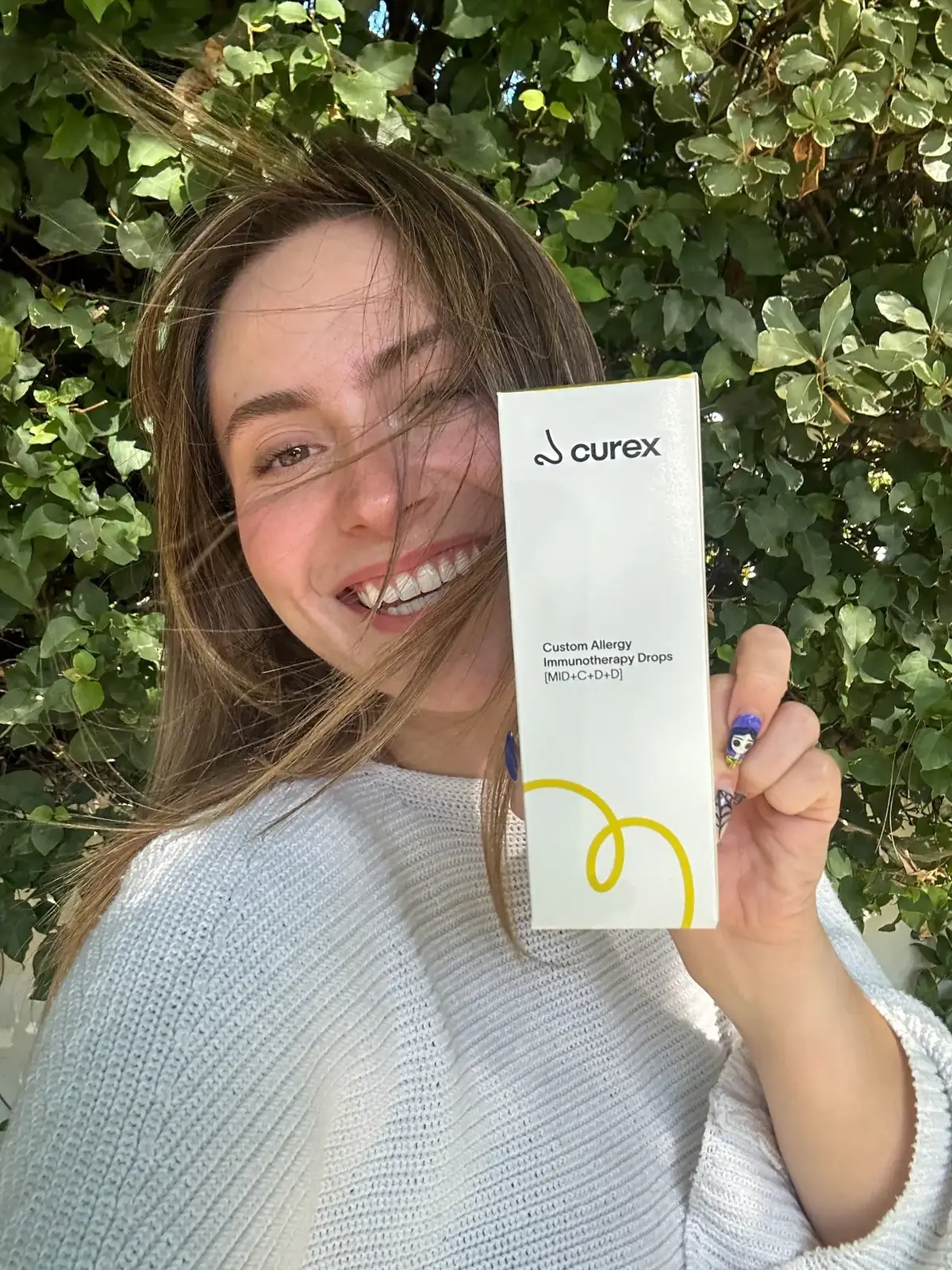
But drops at home? That was different. I looked up Curex that night and took their quiz. Two minutes. It told me I was a candidate and connected me with a board-certified allergist within a week.
The First Few Months
They sent me an at-home allergy test kit. I did the finger-prick blood test while watching TV — it was honestly nothing. A few days later, my allergist reviewed the results over video: I was allergic to 11 things. Eleven. Tree pollen (multiple types), grass pollen, ragweed, dust mites, cat dander, and mold. No wonder Zyrtec was losing the battle.
My custom drops arrived about a week later. Little bottle, daily dose under the tongue. The first month, I didn't notice much — my allergist said that was normal. By month three, I realized I'd stopped reaching for the Flonase. By month five, I forgot my Zyrtec two days in a row and... nothing happened. No rebound itch. No sneezing fit. Just... normal.
Where I Am Now
It's been 11 months. I haven't taken a Zyrtec in four months. Last spring — historically my worst season — I had maybe three bad days total. Three. Compare that to the three bad months I used to have.
I still take my drops every morning. My allergist says the full course is about 3 years for lasting results, and I'm completely on board. The drops take literally 30 seconds. I don't have to go anywhere. They show up at my door every month.
The thing that gets me is how long I waited. Twelve years of treating symptoms when I could have been fixing the actual problem. I'm not mad at my old allergist — I think a lot of doctors just default to what's easy. But I wish someone had told me sooner that there was another option.
If you're reading this and you're on your fifth or tenth year of daily antihistamines, just... look into it. That's all I'm saying. Take the quiz. Talk to an allergist. You might be surprised.
See if allergy drops could work for you
Free 2-minute quiz. Custom drops shipped monthly. FSA/HSA eligible.
Check My Eligibility — It's FreeCancel anytime. No insurance required.